
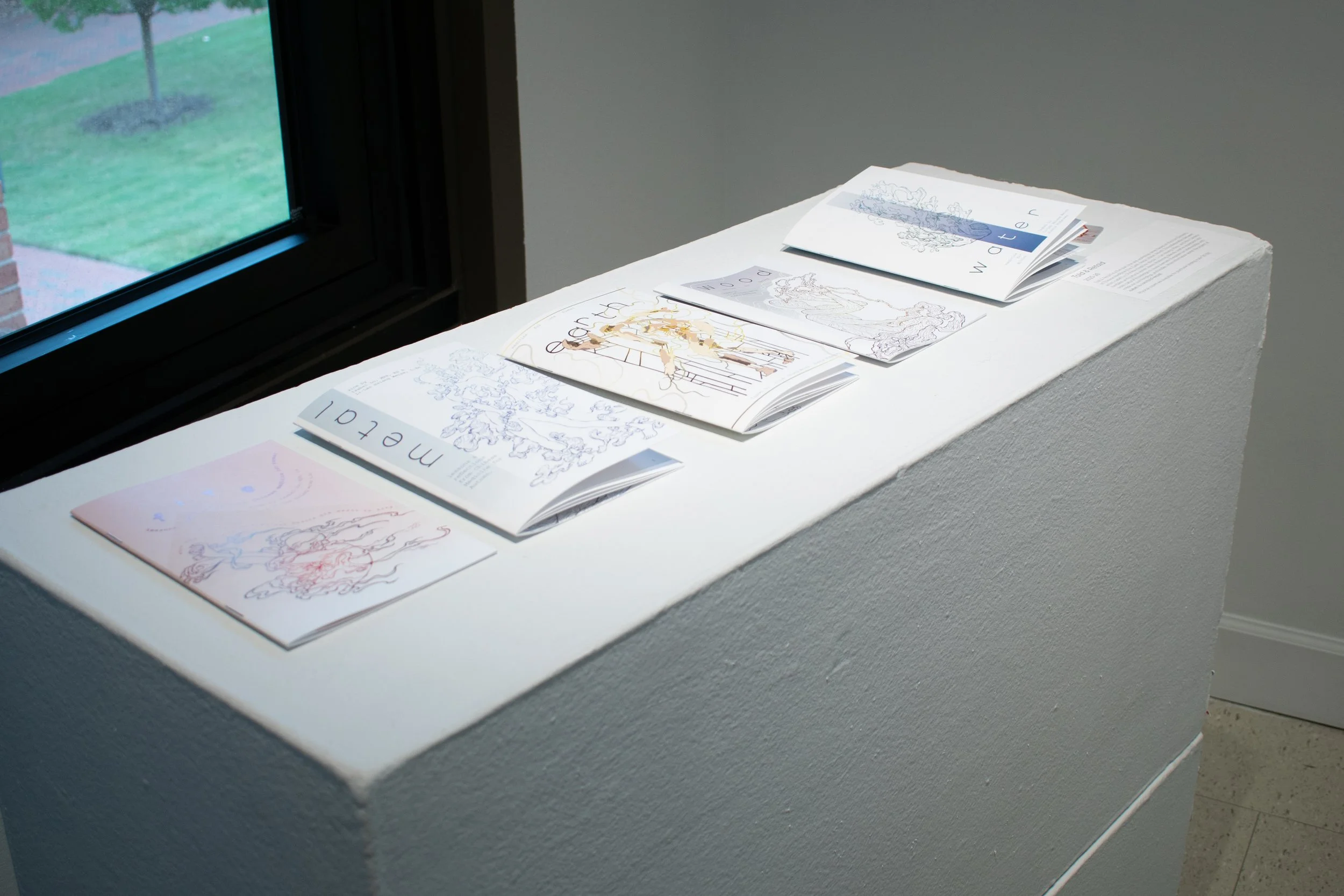
Shameful Company
October 5 – November 2, 2026 Rowe Gallery, University of North Carolina at Charlotte
In Chinese Medicine, the soul is a delicate balance of Yin and Yang elements: Yin as the heavy, material ways we deal with desire, survival, and mortality; Yang as the light, ethereal ways we find creativity, insights, and higher purpose. Shame arises when the two cannot find congruence, when society’s binary expectations divorces our expressions, desires, and creative purpose. In Western culture, fluid forms of moving and being within a body are categorized and shamed as unnatural, disgusting, and diseased.
Pigments and fluids remain everpresent and ambiguous, yet intentionally categorized and closeted; shameful in the company of our bodies: Bilirubin–a yellow, ‘by-product’ of hemoglobin breakdown–tints fluids and membranes (urine, bile, feces, jaundice) that remind us of disgust and disorder. Pigments in soybean skins are deemed ‘unmarketable’ and ‘damaged’. Emerging from the seed’s hilum–a “small scar marking its former place of attachment”–the dark pigments are responses to harsh conditions (viruses, cold temperatures).
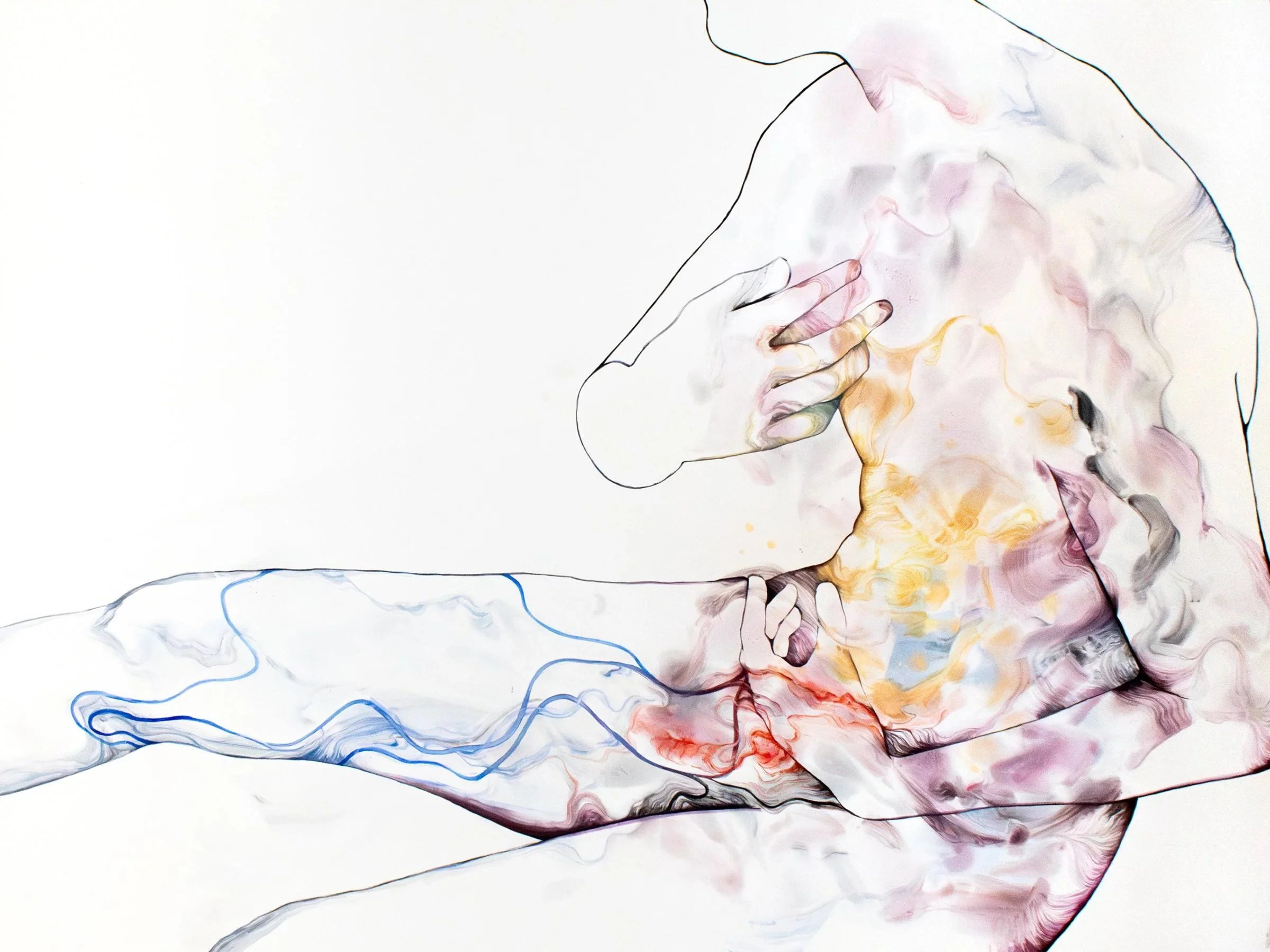
Through figurative paintings and murals, contemporary issues of queerness, disorder, and disease are reframed through a Chinese medicine lens; how binary categorization and diagnoses ultimately create incongruence in our bodies and souls that stagnate as shame.

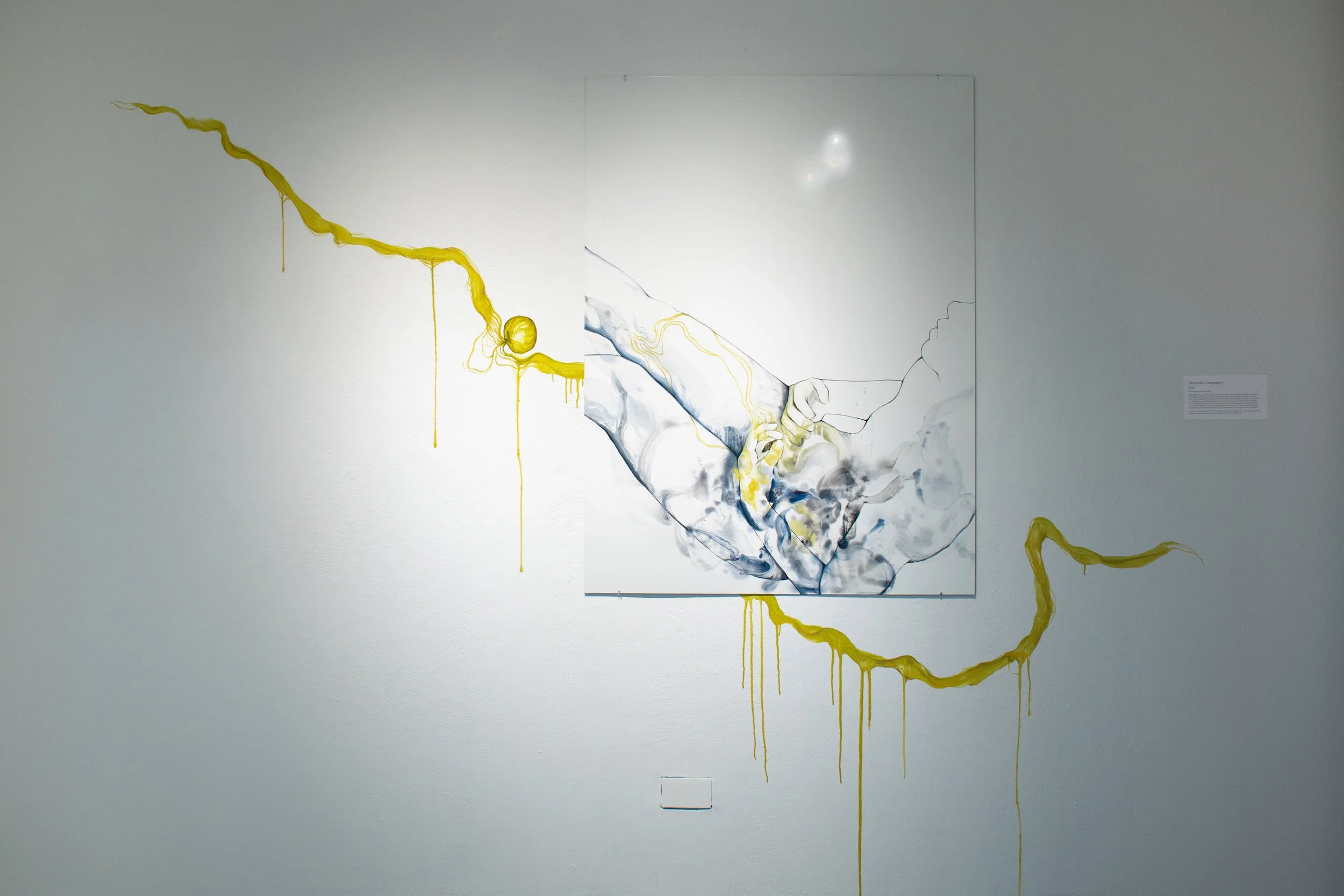
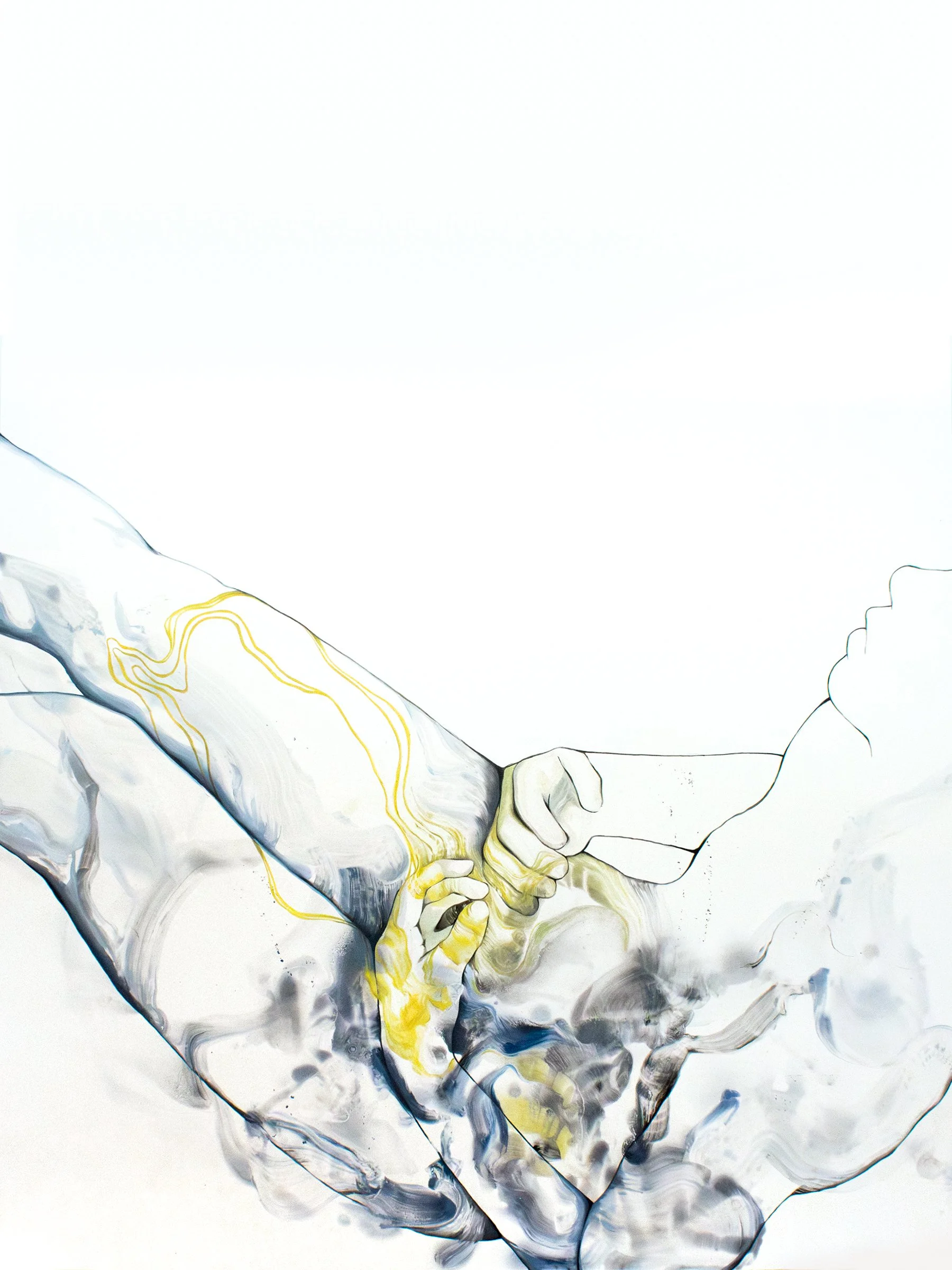
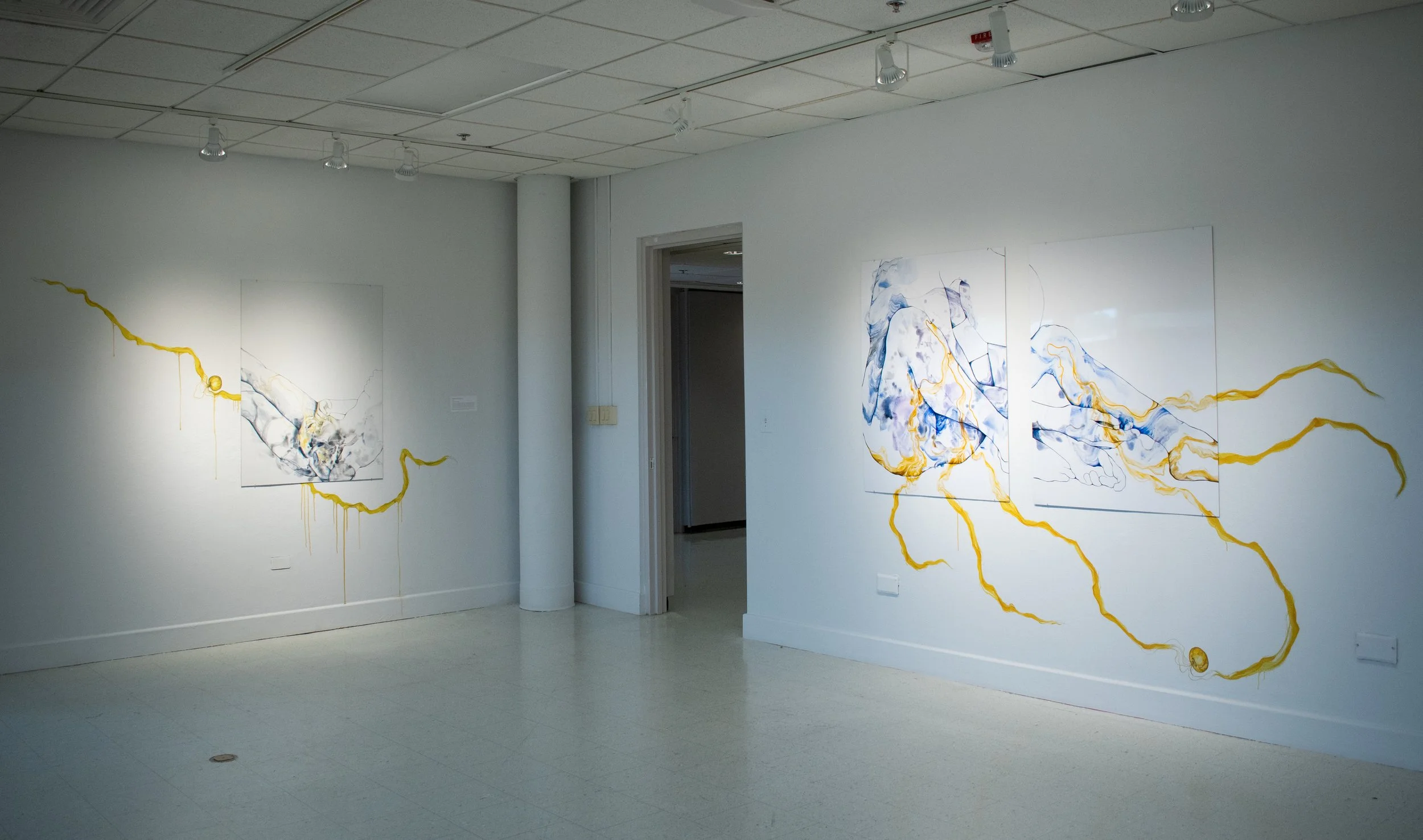
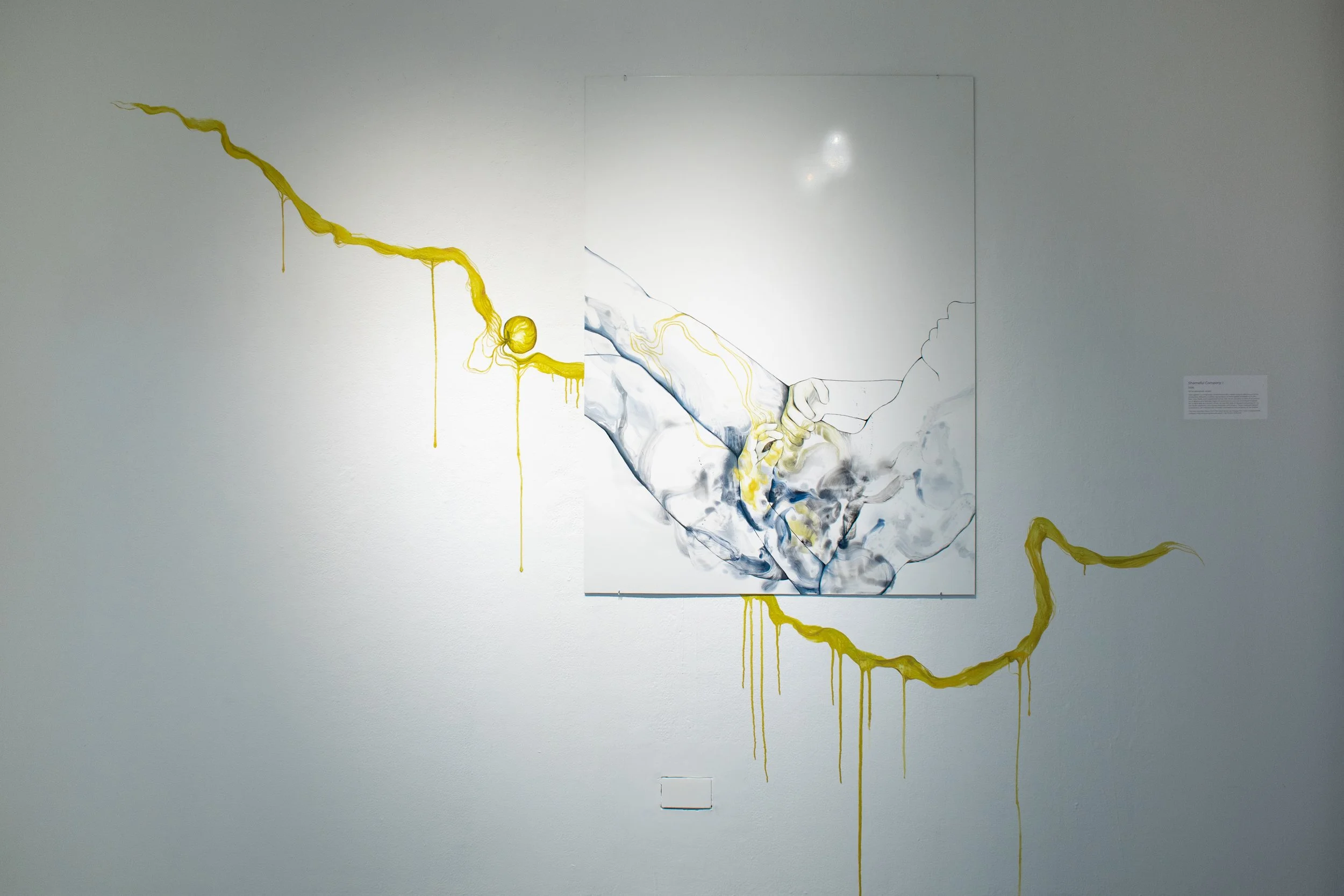
Shameful Company I
installation: 60 × 84 inches, oil on aluminum & acrylic, 2026
The liver meridian flows from the second toe up through the torso. A pigmented soybean indicating acupressure point Liver-8 (sea of blood).
36 × 48 inches, oil on aluminum
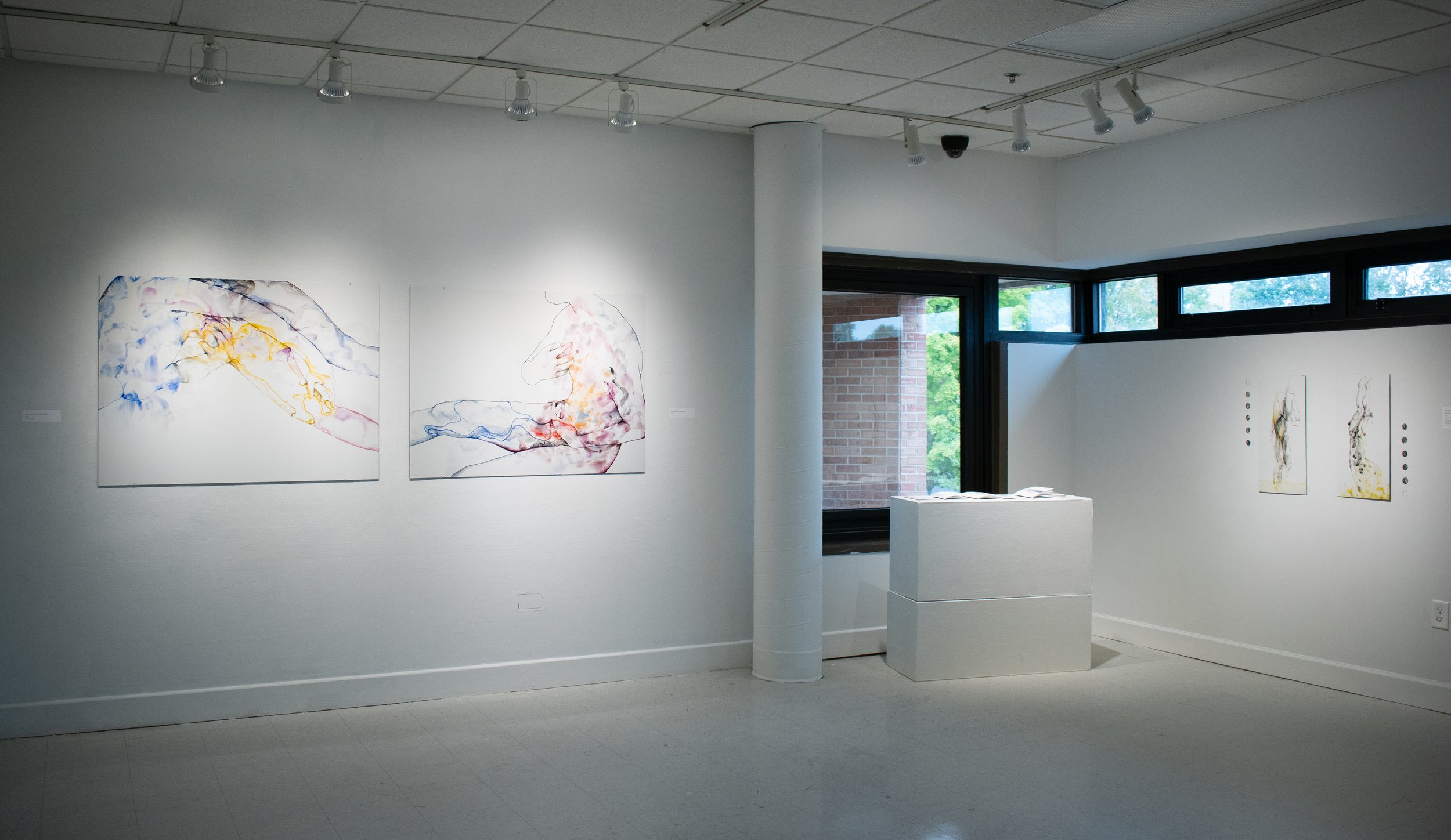
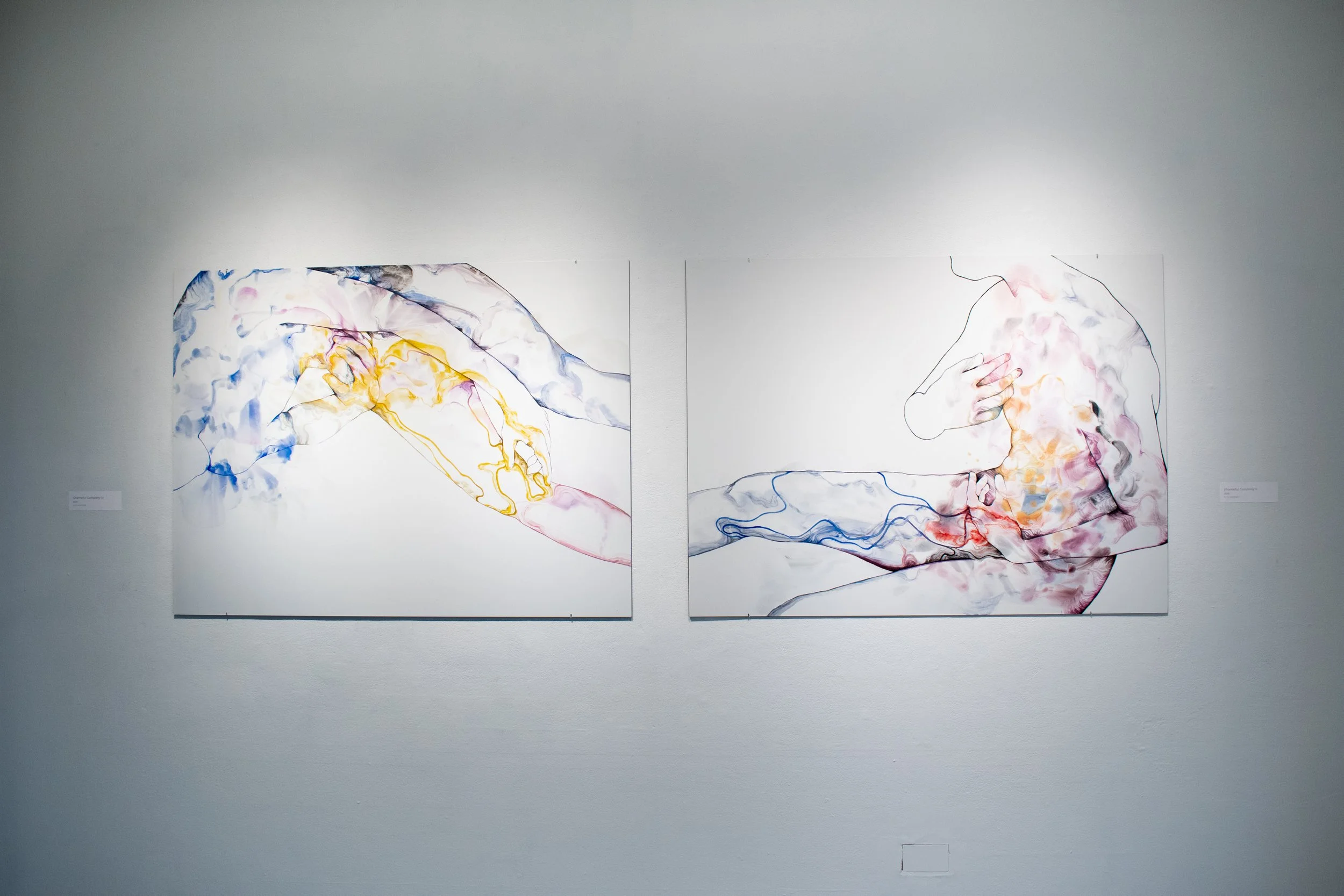
Shameful Company II
48 × 36 inches, oil on aluminum, 2026
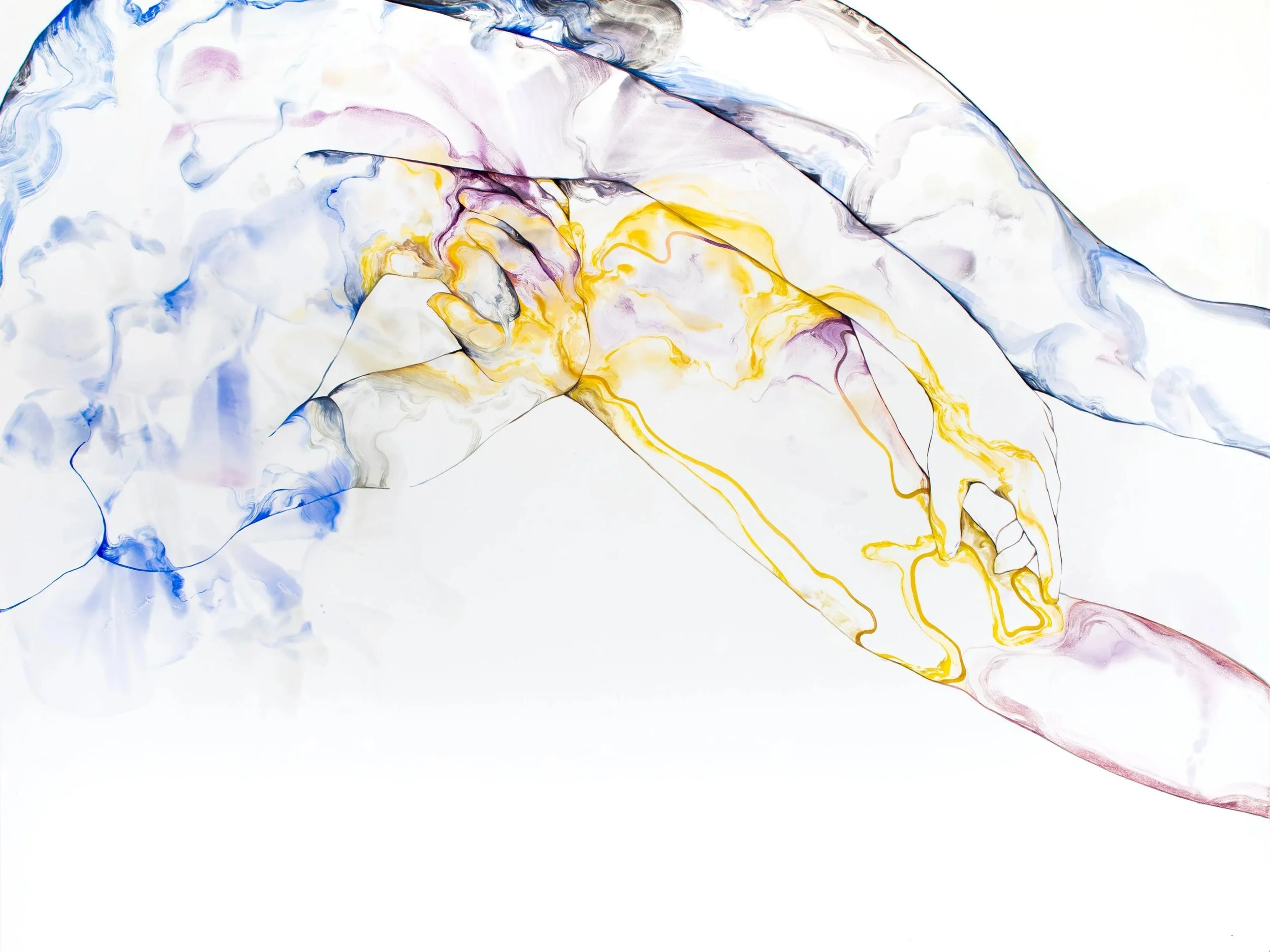
Shameful Company III
48 × 36 inches, oil on aluminum, 2026
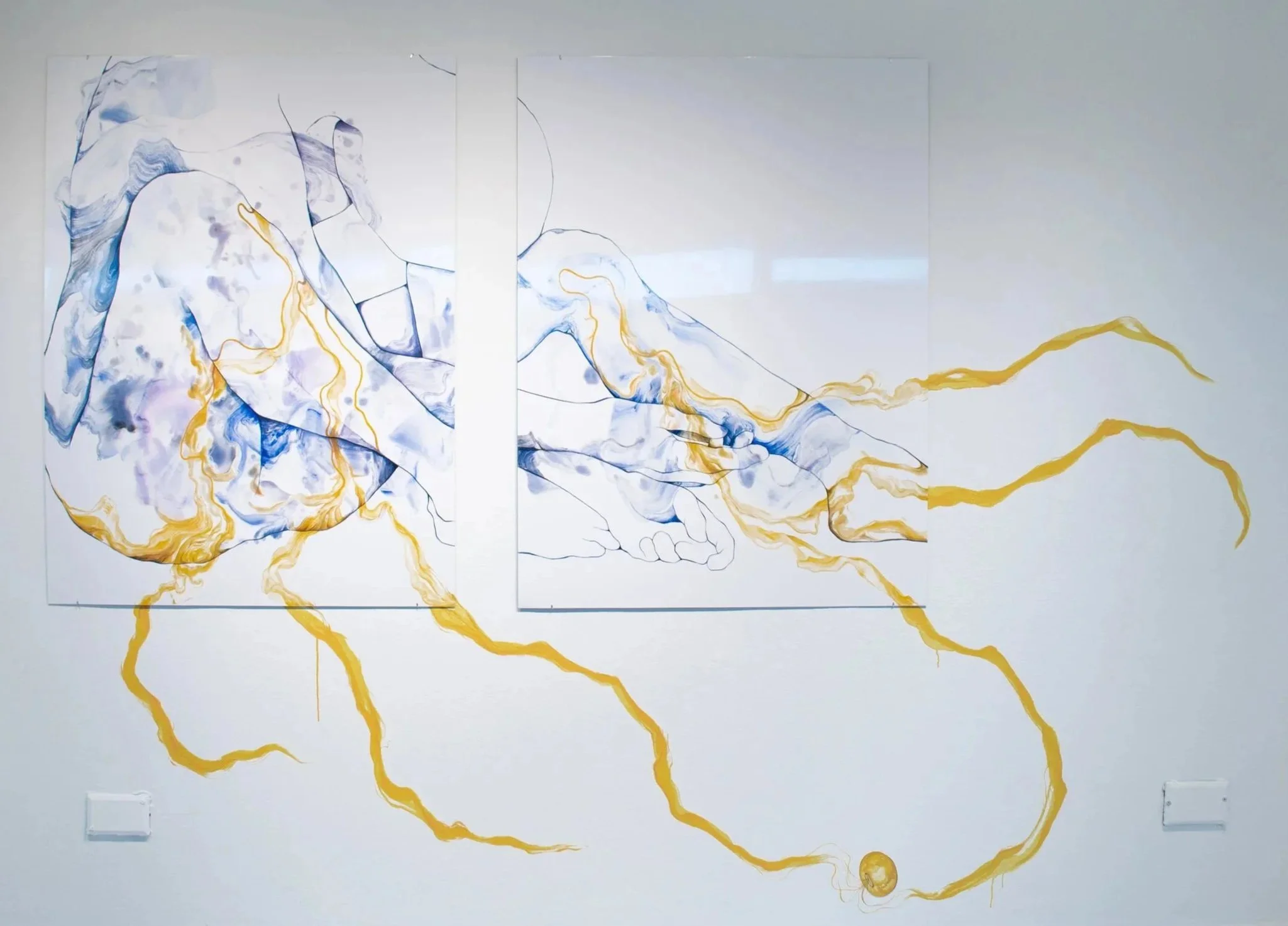
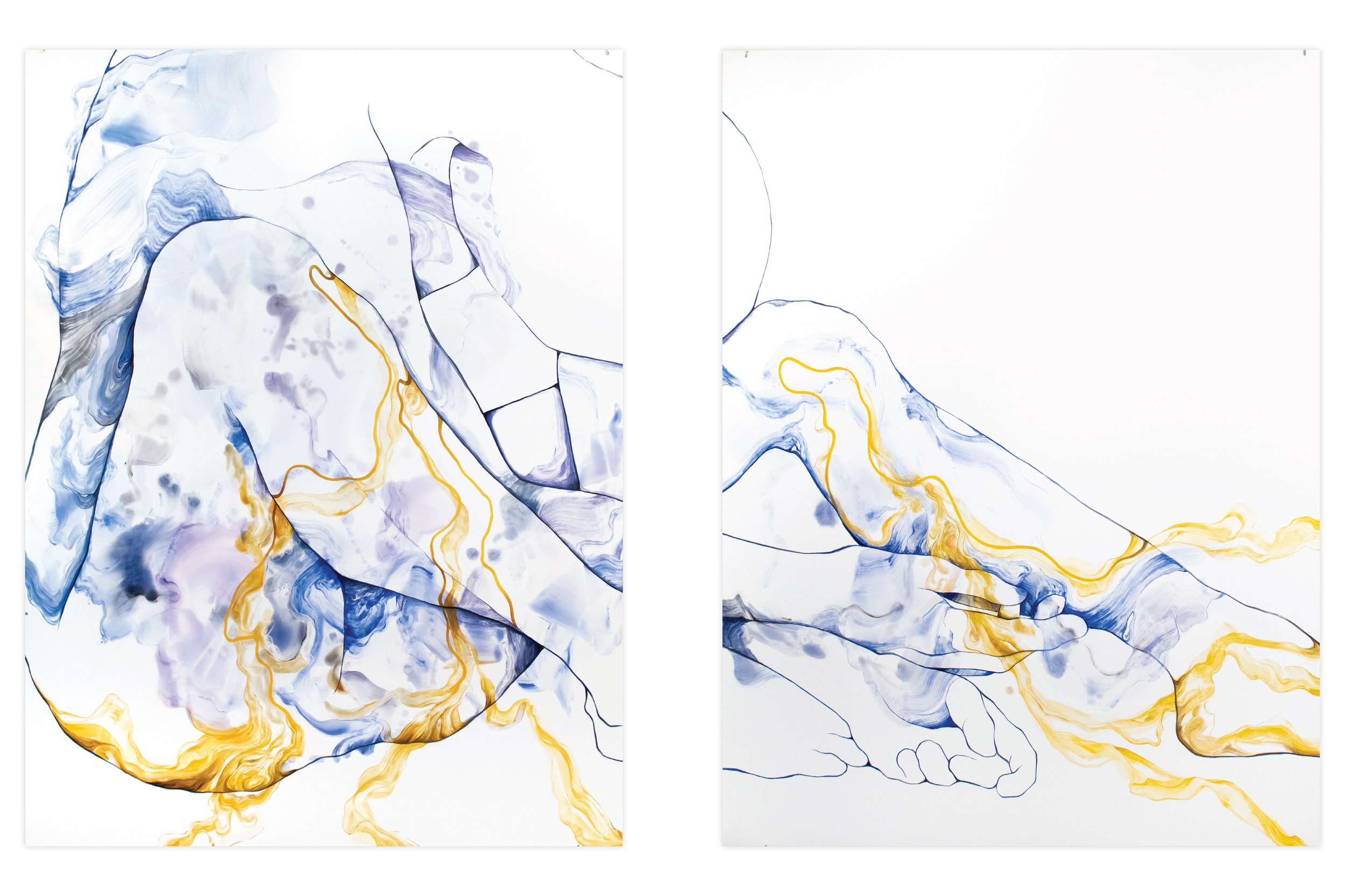
Shameful Company IV
installation: 108 × 72 inches, oil on aluminum & acrylic, 2026
The movement of the yellow fluid loosely outline an ancient character for 行 (movement or element): three pairs of curved lines in motion.
48 × 78 inches (diptych), oil on aluminum
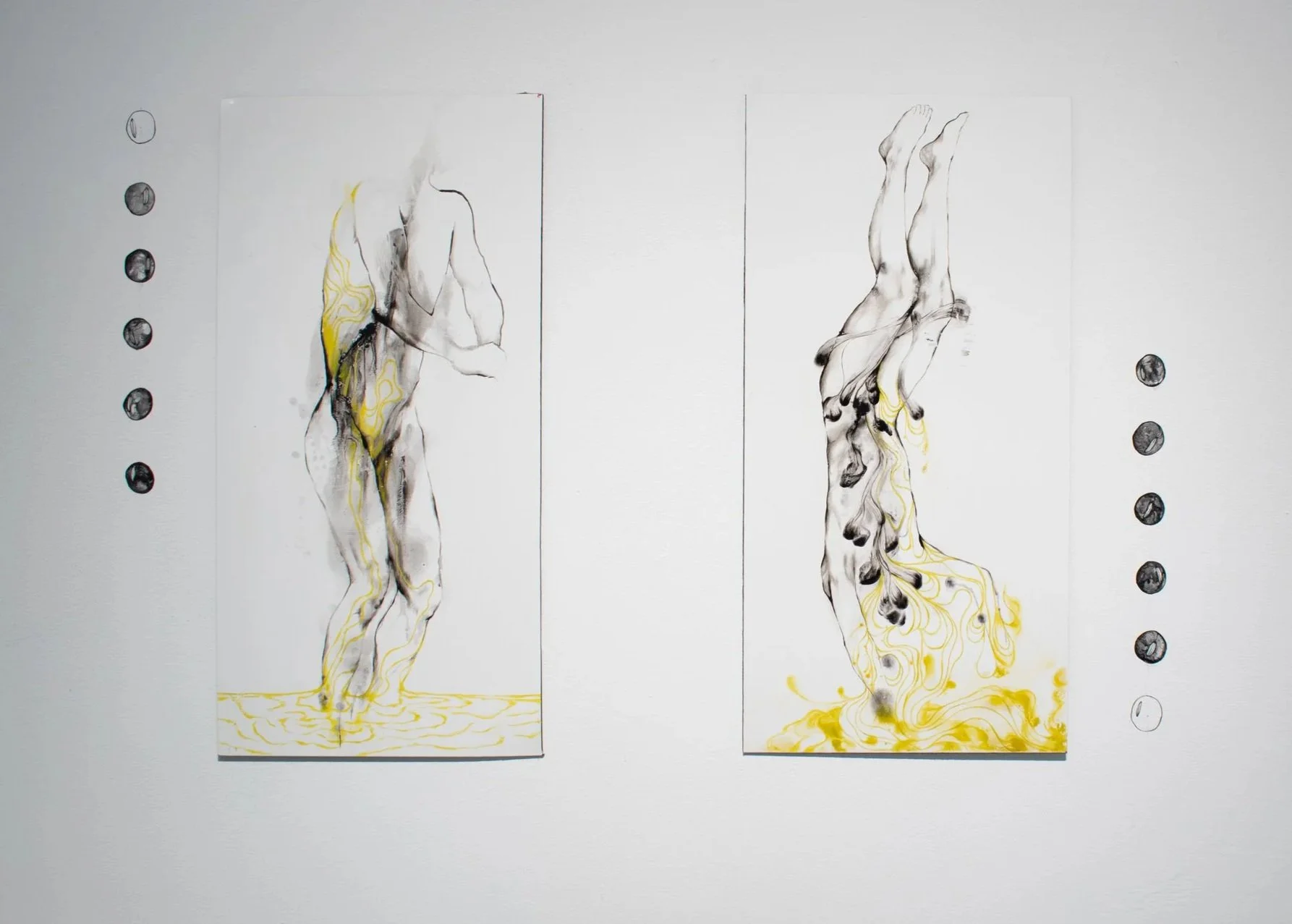
Bilirubin 23, 24
installation: 24 × 24 inches, oil on aluminum & acrylic, 2026
Hexagrams are a series of 64 symbols. Each contains six stacked lines of Yang (solid, unbroken) and Yin (broken), representing a way of change. In divination methods, two hexagrams are drawn and a path of change emerges from the difference. Here, Yin is represented by a pigmented soybean, and Yang represented by a nonpigmented soybean. Hexagram 23 (left) is stopping so that we can look back and return to who we are. Hexagram 24 (right) is a time of emptiness returning to fullness.
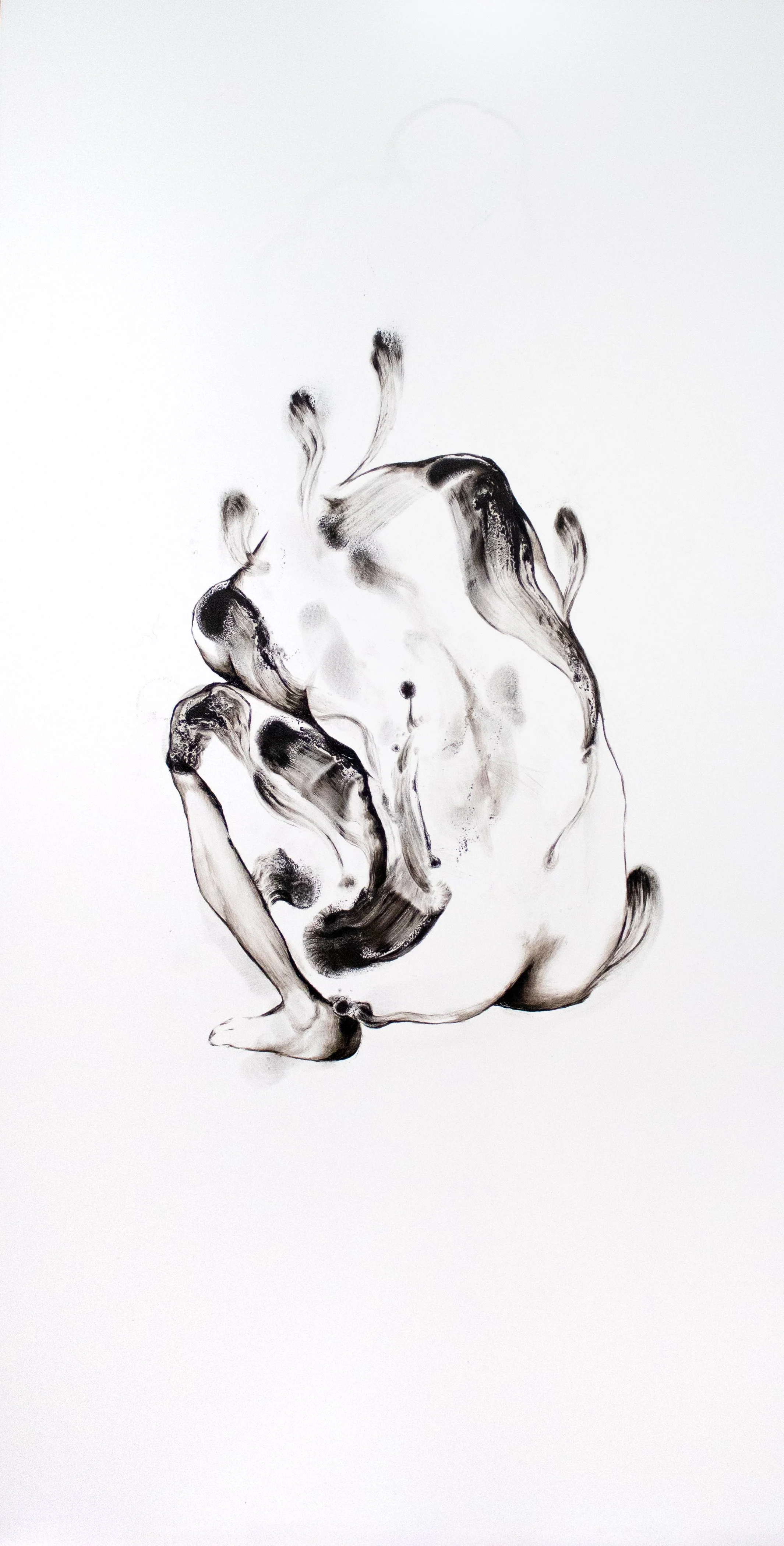
hēidòu I
12 × 124 inches, oil on aluminum, 2026
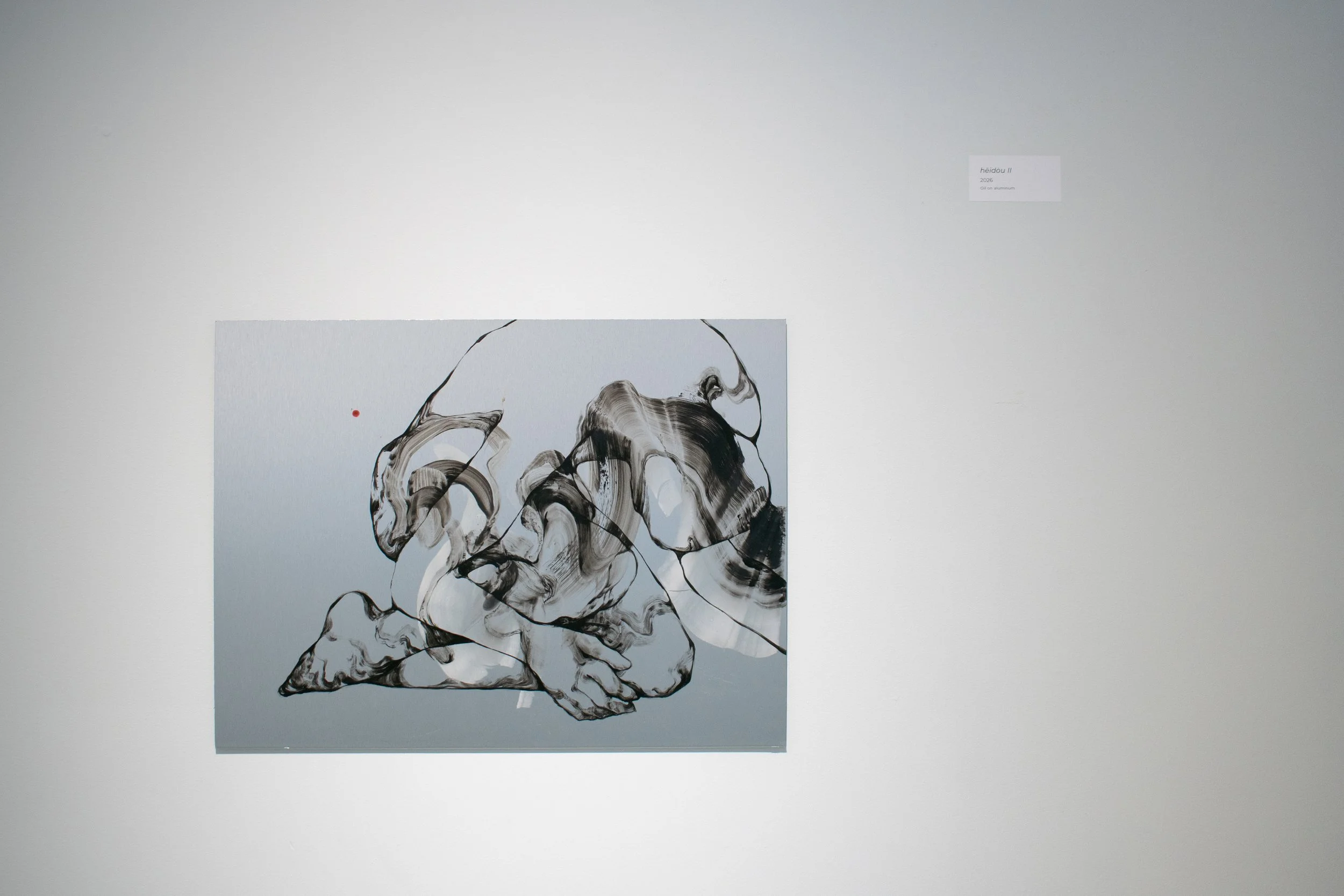
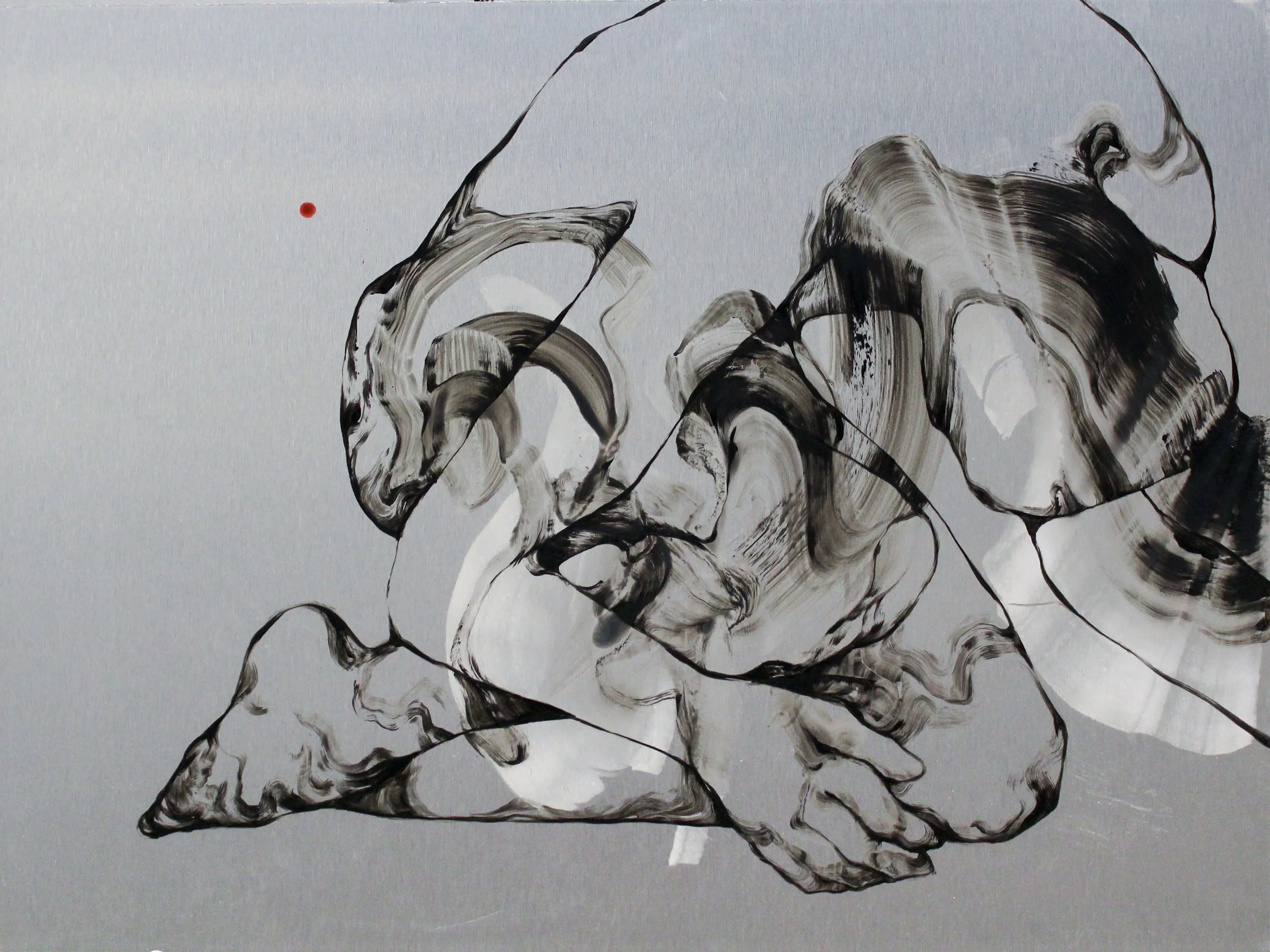
hēidòu II
24 × 16 inches, oil on aluminum, 2026